
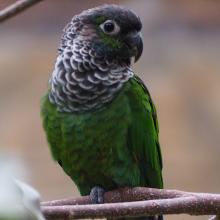
The Green-cheeked Parakeet is a small parrot native to the forests and woodlands of central South America. Their predominantly green plumage blends into the leaves and branches of the forest canopy, helping them avoid predators.
Green-cheeked Parakeets are highly social birds that typically form groups of 10 to 20 individuals, although larger flocks may gather where food is abundant. They often roost together in treetops. They stay in touch with other members of their flock using contact calls and loud screeches. Individuals help watch for predators while feeding, which protects the flock.
Their diet consists of seeds, fruits, berries, nuts, flowers, and other plant material. They spend much of their day foraging in trees, using their strong beaks and dexterous feet to manipulate food. Like many parrots, they play an important role in their ecosystem by dispersing seeds from the fruits they consume.
Green-cheeked Parakeets nest in hollow trees, where the female lays 4 to 6 eggs. The eggs are incubated for approximately 25 days, and both parents help care for the chicks after they hatch. Young birds remain in the nest until they are fully feathered and capable of flight, then continue learning important survival skills from their parents and flock mates.
The Green-cheeked Parakeet is currently listed as Least Concern on the IUCN Red List. Its population is considered stable across much of its range, and it remains relatively common in suitable habitat. However, local populations can be affected by habitat loss due to deforestation and by trapping for the pet trade. With proper protection of forest habitats, this adaptable and social parrot is expected to remain a familiar species throughout much of its native range. Green-cheeked Parakeets can live for around 30 years.